
Custom 4140 Stubby Pin for an Excavator Quick Attach System
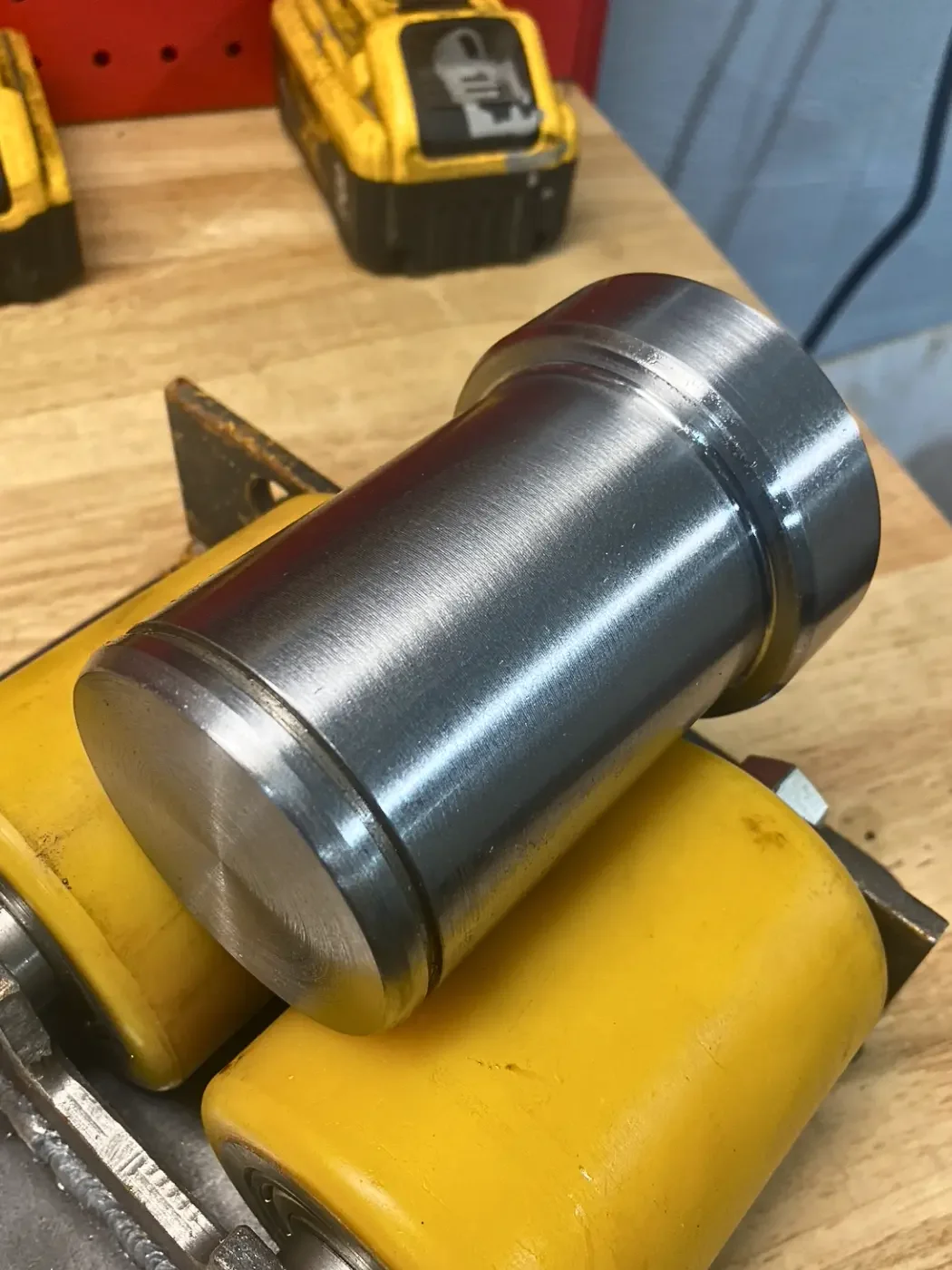
This stubby pin was machined from 4140 steel as a replacement part for an excavator quick attach system.
Quick attach systems make it possible to change buckets and attachments in a matter of minutes, but once the attachment is locked into place, everything depends on the connection between the machine and the tool it’s carrying. Every bucket of material lifted, grading pass, and other force transferred through the attachment ultimately passes through a relatively small number of pins and bushings. If those components become worn, movement starts to develop instead of the machine and attachment acting together as one connected unit.
This project involved manufacturing a replacement stubby pin to restore that connection within the quick attach assembly.
Pins Do More Than Hold the Attachment in Place
From the outside, a quick attach pin looks fairly simple, but once the machine starts working, it becomes one of the hardest-working parts of the entire attachment.
As the excavator digs, lifts, curls, and travels across uneven ground, the pin transfers those forces between the coupler and the attachment while allowing the joint to continue moving as intended.
To perform that job successfully, the pin needs to:
support repeated loading
fit correctly within the mating bushings
maintain alignment throughout the joint
resist wear during normal operation
continue performing under demanding working conditions
Although it’s one of the smaller parts of the assembly, the condition of the pin influences how the entire quick attach works and feels during operation.
Pins rarely fail without warning.
More often, operators start to notice a little more movement here or there in the attachment than they normally would. The bucket may no longer feel quite as tight on the coupler, or the attachment may develop additional play during normal operation. That extra movement is often a sign that the wear components within the joint should be inspected.
Depending on the condition of the assembly, replacing the pin, bushings, or both may help restore the fit before wear begins affecting more expensive parts of the quick attach.
Most Pin Wear Begins Gradually
The Pin and Bushing Work Together
A replacement pin shouldn’t really be considered by itself because it operates against bushings that are also intended to wear over time, and the condition of one often influences the other.
Installing a new pin into heavily worn bushings, or vice versa, may not restore the joint to operate in the way it was intended. That’s one reason why both parts are often inspected at the same time during a repair instead of assuming that only a visibly worn component needs a closer look.
Fit Matters Every Time the Attachment Moves
A replacement pin isn’t about just manufacturing to match a given diameter- it needs to fit the bushings, suit the quick attach, and work with the surrounding components throughout thousands of operating cycles.
Clearance that’s too great may allow movement to return sooner than designed or expected, while an improper fit in the opposite direction can create its own problems during operation.
As such, producing a replacement pin involves understanding the joint it works in as a whole.
Why 4140 Steel Was Used
This stubby pin was machined from 4140 steel as it’s often used for heavy equipment components that experience repeated loading and demanding operating conditions.
The appropriate material always depends on the application at hand, but quick attach pins are expected to withstand continual loading while remaining serviceable alongside the surrounding wear components.
Small Wear Parts Help Protect Larger Repairs
Quick attach systems are built around components that can be replaced as they wear.
Keeping pins and bushings in good condition helps maintain the connection between the excavator and its attachments while reducing the likelihood that wear spreads into more difficult and expensive repairs.
This replacement pin was manufactured with the same objective, restoring the joint so the attachment could continue performing as intended.
Frequently Asked Questions
-
It depends on their condition. Because the two components wear against one another during normal operation, it’s a good idea to inspect both at the same time. If one has experienced significant wear, replacing only the other may not fully restore the fit of the joint.
-
Excessive movement within the attachment is often one of the first signs. Operators may also notice the bucket doesn’t feel as tight on the coupler as it did before. The exact cause should always be confirmed by inspecting the pin, bushings, and surrounding components rather than assuming that just one particular part is responsible.
-
In many cases, yes. Existing pins or the attachment itself can often be measured and evaluated to manufacture a replacement that suits a given application. This can be especially useful for older equipment, or situations where OEM parts are unavailable or long lead times won't cut it.
Related Services
Custom-machined replacement pins, bushings, shafts, and wear components manufactured for heavy equipment repairs.
Replacement components built to restore equipment fit, reduce wear, and extend the service life of working machinery.
Mechanical repair and installation support for industrial equipment requiring precision replacement components.
Similar Projects
A matching wear component manufactured to restore the fit between the pin, bushing, and quick attach assembly.
Another heavy equipment repair project involving a custom-machined replacement component.
Precision-machined hydraulic component manufactured as an alternative to replacing an entire cylinder assembly.
Custom hydraulic support hardware designed to improve hose routing and reduce unnecessary wear throughout hydraulic systems.
Let’s Get Started on Your Project
Need a replacement excavator pin, bushing, or another heavy equipment wear component manufactured?
Send photos, measurements, drawings, or details about the repair through this secure form. We’ll review the application and determine whether manufacturing a replacement component is a practical solution for your equipment.