
Custom Machined Frame for a Belt Sander
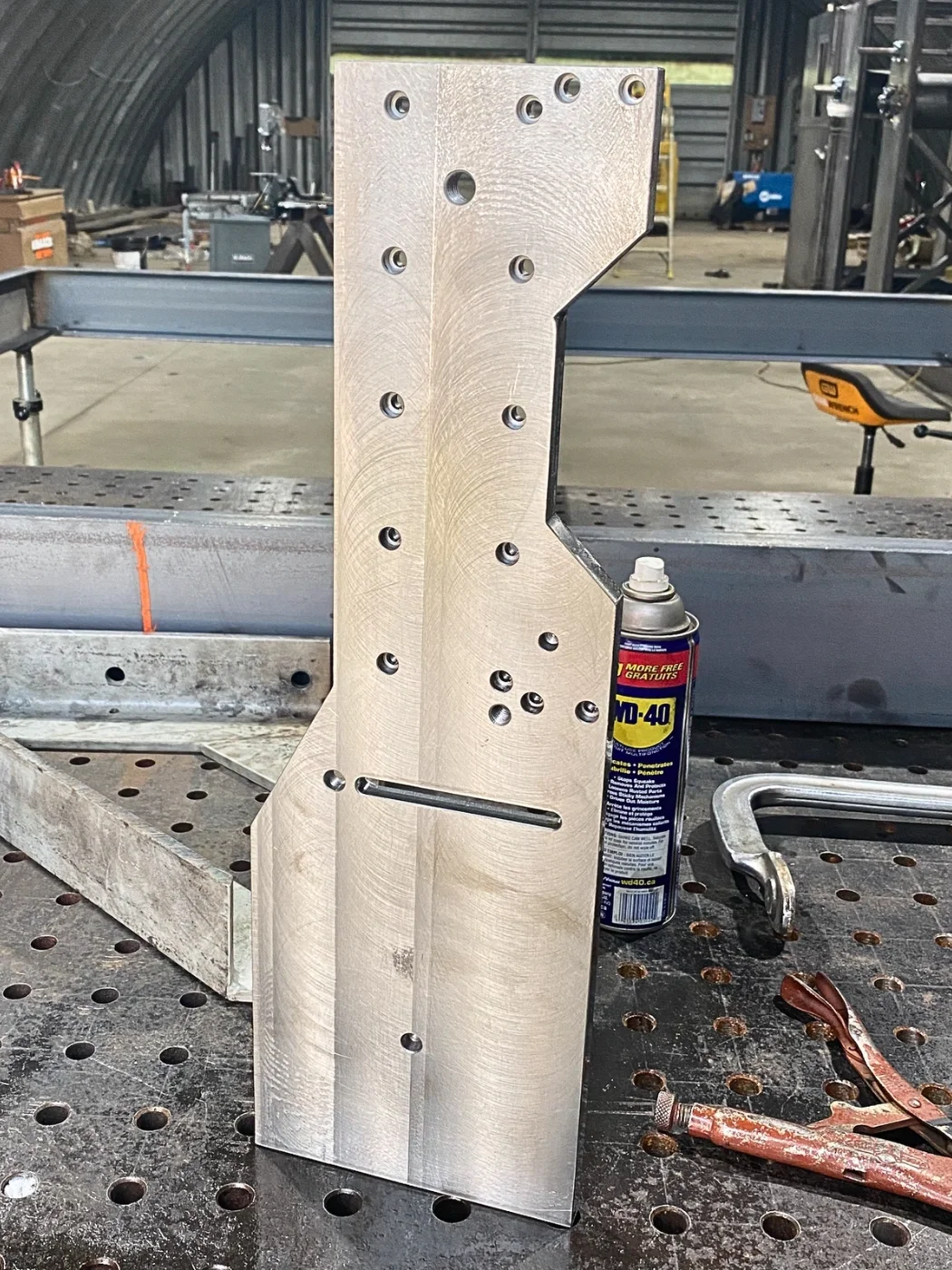
This frame was machined in-house as part of a custom belt sander build.
A machine frame doesn’t produce the finished work, but it determines where the components that do are mounted. Once the bearings, shafts, pulleys, tracking mechanism, work support, and any other components have been installed, the frame becomes this point of reference for the entire machine.
If mounting locations aren’t positioned accurately from the start, correcting the problem later often becomes far more difficult than the work required in manufacturing the frame correctly in the first place.
Every Component Depends on the Same Reference
The frame establishes the position of every major component within the machine, including the bearings, shafts, pulleys, adjustment mechanisms, work support, and other components. None of these parts are installed independently- they are each positioned relative to the others through the frame itself. In other words, the frame doesn't just support the machine's weight, it's responsible for establishing the geometry the rest of the machine depends on.
Problems Don’t Always Start with the Part That Fails
When a machine develops tracking issues, vibration, or premature bearing wear, the obvious place to look is often the affected component.
While that can be exactly where the problem is sometimes, if the underlying support structure no longer maintains the relationship those components were designed around, they can prove to be just as big a concern. Replacing bearings, pulleys, or other individual parts may not completely solve the problem if the components they’re mounted to are no longer where they’re supposed to be.
An experienced millwright will look beyond the failed part and consider what may have caused it to fail in the first place.
Accuracy is More than Individual Dimensions
Machining a frame isn’t just about producing a unit with the correct dimensions. Just as important is maintaining the relationship between the machined features that other components will eventually operate from.
Bearing bores, mounting surfaces, adjustment points, and shaft locations all need to relate to one another as intended by design because that’s what ultimately determines how well the completed machine functions in the short and long term.
Why 1018 Steel Was Used
This frame was machined from 1018 steel, which is a material that’s commonly used for fabricated and machined equipment because it machines well and is suitable for many structural applications.
The right material always depends on the situation at hand, but when manufacturing a machine frame, selecting a material that suits both the machining process and the finished equipment is part of producing components that perform well.
Frequently Asked Questions
-
It depends on the condition of the original frame and the scope of the project. Some machines can be successfully modified, while others require so many changes that manufacturing a new frame becomes the more practical option. Starting with a new frame also allows mounting locations and component geometry to be established around the intended design instead of working around existing limitations.
-
It can. Machine components don’t exist independently of one another. Bearing locations, shafts, pulleys, tracking mechanisms, and work supports all reference the frame and often each other. During a custom build, it’s important that those relationships are considered throughout the assembly process rather than treating each component as an isolated part or waiting to the end to see if everything fits as it should.
-
In many cases, yes. Existing equipment can often be measured and evaluated to manufacture a replacement frame or to develop a new frame for a modified version of the machine. The approach depends on the information available and the goals of the project.
Related Services
Precision machining for machine structures, replacement parts, custom equipment, and one-off manufacturing projects.
Purpose-built machinery and tooling manufactured around specific production requirements rather than standard designs.
Custom equipment, structural components, and fabricated assemblies developed around unique applications.
Similar Projects
A drivetrain component manufactured to maintain alignment and proper engagement within an existing machine.
Precision shop tooling designed to improve cutting accuracy and machining consistency.
Custom tooling manufactured to improve rigidity and workpiece support during turning operations.
Let’s Get Started on Your Project
Need a machine frame or structural component manufactured for a custom build, rebuild, or equipment modification?
Send drawings, sketches, dimensions, photos, or details about the project through this secure form. We’ll review the application and determine whether a custom-machined solution is a practical fit for your equipment.