
Custom Hydraulic Tie Down Blocks and Weld-On Fittings
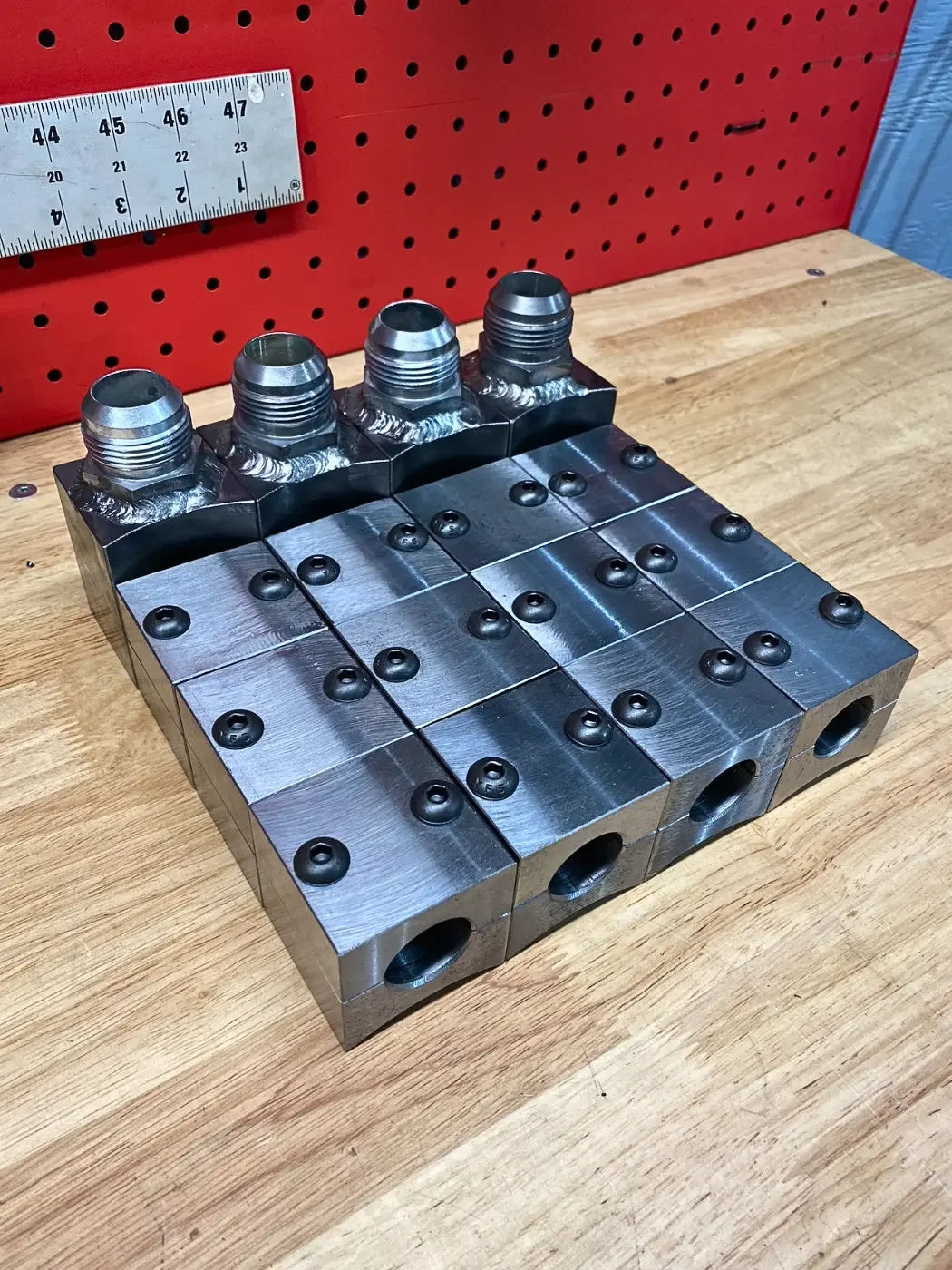
These hydraulic line tie down blocks and weld-on fittings were manufactured to support and secure hydraulic lines within an existing hydraulic system.
Hydraulic hoses are designed to flex where they’re supposed to, with problems often starting when they begin moving where they aren’t.
As a machine operates, vibration, repeated cycling, and normal machine movement can gradually cause unsupported hoses to rub against nearby components or place unnecessary stress on fittings and connection points. Those small movements may not seem significant at first, but after enough operating hours they can eventually contribute to hose damage or premature failure.
This project involved manufacturing hydraulic line supports that help keep the hoses properly positioned throughout normal operation.
Why Tie Down Blocks and Weld-On Fittings Are Used
A hydraulic hose naturally follows the path of least resistance. Without adequate support, that path isn’t always the one the person who designed the machine intended. Over time, hoses may also start making contact with nearby components, moving more than expected during operation, or placing additional strain on fittings as the machine cycles.
These custom manufactured components establish dedicated mounting locations for hydraulic line supports.
Supporting the hose at strategic locations helps keep routing consistent while reducing unnecessary movement throughout the system. These custom components also provide consistent attachment points that help keep the routing where it was intended to be. Because every machine is laid out differently, these types of support components are often built to suit available space and the existing hydraulic system.
Hose Failures Often Start Somewhere Else
When a hydraulic hose starts leaking, it’s easy to assume that the hose itself has reached the end of its service life.
Sometimes, that’s exactly the case, but other times, a hose fails because it had been rubbing against another component, flexing repeatedly at the same location, or carrying loads it wasn’t intended to support.
Replacing the hose without addressing the reason it failed may simply lead to a repeat of the same problem down the road. For this reason, hydraulic repairs often include evaluating how the lines are supported as well as repairing or replacing any damaged components.
Routing Affects More than Appearance
Neatly routed hydraulic lines don’t just make a machine look organized. Good routing can make a system easier to inspect, simplify future maintenance, reduce unnecessary contact between hoses and surrounding components, and make it easier to identify problems before they warrant larger repairs.
The goal isn’t to create perfectly straight hydraulic lines for the sake of visual appearance- it’s a matter of creating routing that suits the way the machine operates and experiences wear over time.
Why 1018 Steel Was Used
These components were manufactured from 1018 steel because it’s commonly used for fabricated and machined support hardware that requires good machinability and weldability.
Frequently Asked Questions
-
Yes. Hydraulic hoses are designed to flex during normal operation, but repeated movement in the wrong location can contribute to abrasion, unnecessary stress on fittings, or fatigue over time. Supporting the hose appropriately helps control where that movement occurs.
-
If the original supports are damaged, missing, or no longer keeping the hose in its intended position, simply replacing only the hose may not address what contributed to the failure in the first place. During many hydraulic repairs, it’s worth assessing the condition of the mounting hardware as well as the hose itself.
-
In many cases, yes. Existing mounting locations, hydraulic layouts, or the machine itself can usually be evaluated to manufacture support components that suit the application, especially where standard hardware doesn’t provide the required fit or routing.
-
That depends on the equipment. In some applications, weld-on fittings provide dedicated attachment points where suitable mounting locations don’t already exist. They can also help establish more consistent hose routing by locating the supports exactly where they’re needed rather than where an existing bolt or bracket happens to be available.
Related Services
Custom-machined hydraulic support components, brackets, fittings, and replacement hardware manufactured for existing equipment.
Replacement components designed to improve reliability while reducing unnecessary wear throughout hydraulic systems.
Similar Projects
A replacement hydraulic component manufactured to restore cylinder performance during repair.
Matching hydraulic components manufactured together for a complete rebuild rather than individual part replacement.
A replacement hydraulic rod manufactured for demanding mobile equipment service.
Precision-machined gland manufactured to support rod alignment and sealing performance within an existing cylinder.
Let’s Get Started on Your Project
Need hydraulic line supports, weld-on mounting hardware, or other custom components manufactured for an existing hydraulic system?
Send photos, drawings, measurements, or details about the machine through this secure form. We’ll review the application and determine whether manufacturing custom support components is a practical solution for your equipment.