
7.5" Diameter Hydraulic Piston Machined from 1045 Steel
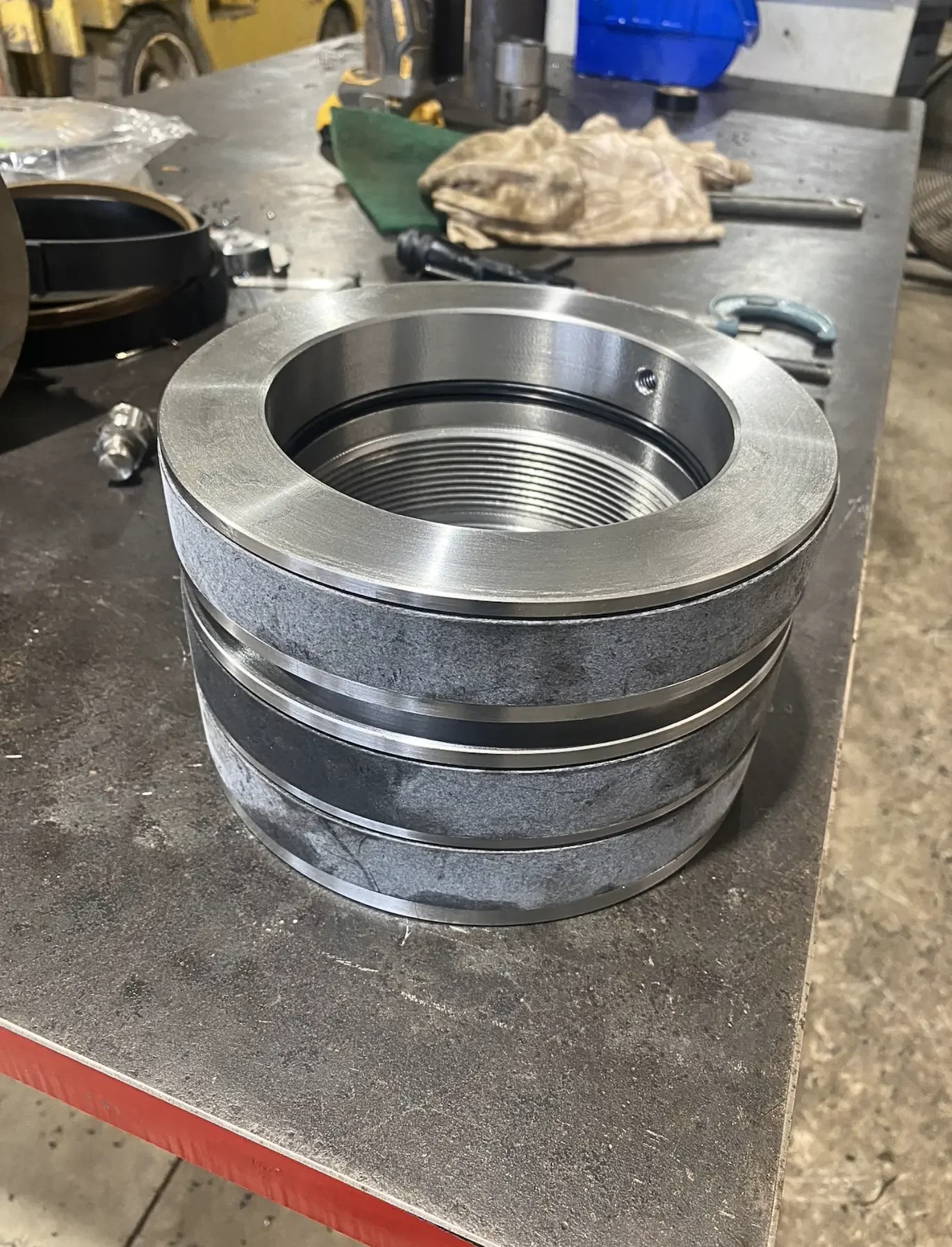
This hydraulic piston was machined from 1045 steel for a large hydraulic cylinder using a 7.5 inch piston diameter.
Hydraulic pistons all perform the same basic function regardless of their size, but repairing a large cylinder is often a very different job than rebuilding a smaller one. Larger cylinders are typically found on equipment where they’re doing the majority of the work, and removing one from the machine can take considerably more time and effort before the repair even begins.
For that reason, rebuilding a large hydraulic cylinder usually involves more than replacing seals and putting it back together. Once everything has been disassembled, it’s an opportunity to inspect the internal components and determine whether any of them should be repaired or replaced before the cylinder is reassembled.
This piston was manufactured as a replacement component during that process.
The Piston as the Cylinder Centre
Inside a hydraulic cylinder, the piston separates hydraulic pressure while transferring that force through the rod to move the equipment.
To do that reliably and thus support the assembly’s overall performance, it also needs to:
support the sealing arrangement
fit the cylinder correctly
move smoothly throughout the bore
withstand repeated loading
work with the remaining internal components
Large Hydraulic Repairs Usually Involve More Than One Part
When a large cylinder has already been removed from a machine and completely disassembled, it’s common practice to inspect more than just the component that originally prompted the repair. Depending on the condition of the cylinder, that inspection may include the piston, rod, gland, seals, wear surfaces, and other internal components.
If everything else isn’t in good condition, replacing one worn part without addressing another would likely lead to repeating much of the same work later.
Wear Doesn’t Always Mean Failure
Hydraulic components don’t usually stop working the moment wear begins.
A cylinder may continue operating while clearances gradually increase or sealing performance slowly declines, which is one reason why rebuilds often involve careful inspection instead of replacing just the obviously damaged part. Evaluating components while the cylinder is apart can also help identify wear that may not yet have caused a complete failure but is already affecting performance.
This piston was machined from 1045 steel, a material that’s been used for hydraulic components for many years because it’s well suited to many repair and replacement applications.
Material selection always depends on the work the finished component is expected to perform, but for hydraulic pistons, it’s important to choose a material appropriate for both the cylinder and the demands placed on it during normal operation.
Why 1045 Steel Was Used
Bigger Repairs Usually Mean Higher Stakes
Repairing a large hydraulic cylinder often requires significant labour before the first replacement component is even installed. Removing the cylinder, disassembling it, inspecting the internal parts, and reinstalling everything can represent a considerable investment of time.
For that reason, replacement components are typically manufactured with the expectation that the repair should be done once and done properly, rather than having to repeat the same work because another worn internal component was overlooked.
Frequently Asked Questions
-
Often, yes. Larger cylinders are generally heavier to remove, take longer to disassemble, and can require more labour throughout the repair. Because of the work involved, it’s common to inspect all of the major internal components while the cylinder is apart rather than replacing only the part that originally failed.
-
Yes. Hydraulic components don’t always fail suddenly. A cylinder may continue functioning while wear gradually affects sealing performance or internal clearances. That’s one reason pistons and other internal components are commonly inspected during a rebuild, even if they haven’t completely failed.
-
In many cases, yes. Existing components can often be measured and evaluated so a replacement piston can be manufactured to suit the cylinder. This can be particularly useful for older equipment or applications where replacement parts are no longer readily available.
Related Services
Custom-machined hydraulic components manufactured to match existing equipment and specifications.
Replacement components built to restore hydraulic systems without unnecessary replacement costs.
Expedited machining for hydraulic repairs that can't wait.
Similar Projects
Companion hydraulic gland manufactured for a complete cylinder rebuild.
Precision-machined hydraulic stem and piston built as a matched assembly.
Replacement hydraulic hardware manufactured from durable prehardened steel.
Let’s Get Started on Your Project
Need a replacement hydraulic piston manufactured as part of a cylinder rebuild?
Send photos, measurements, drawings, or details about the cylinder through this secure form. We’ll review the application, determine what information is needed, and let you know whether manufacturing a replacement component is a suitable option for your equipment.