
Industrial Garbage Press
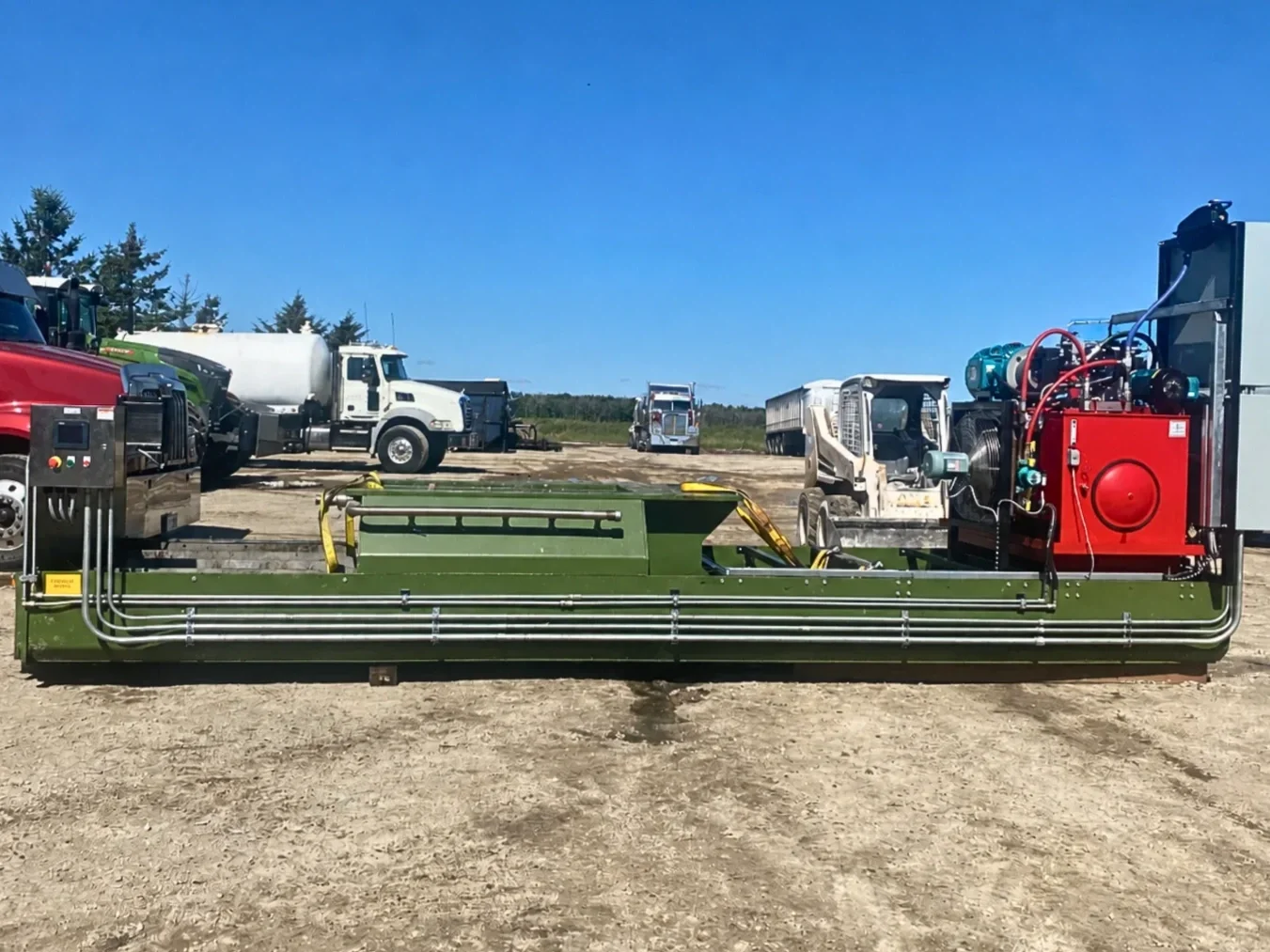
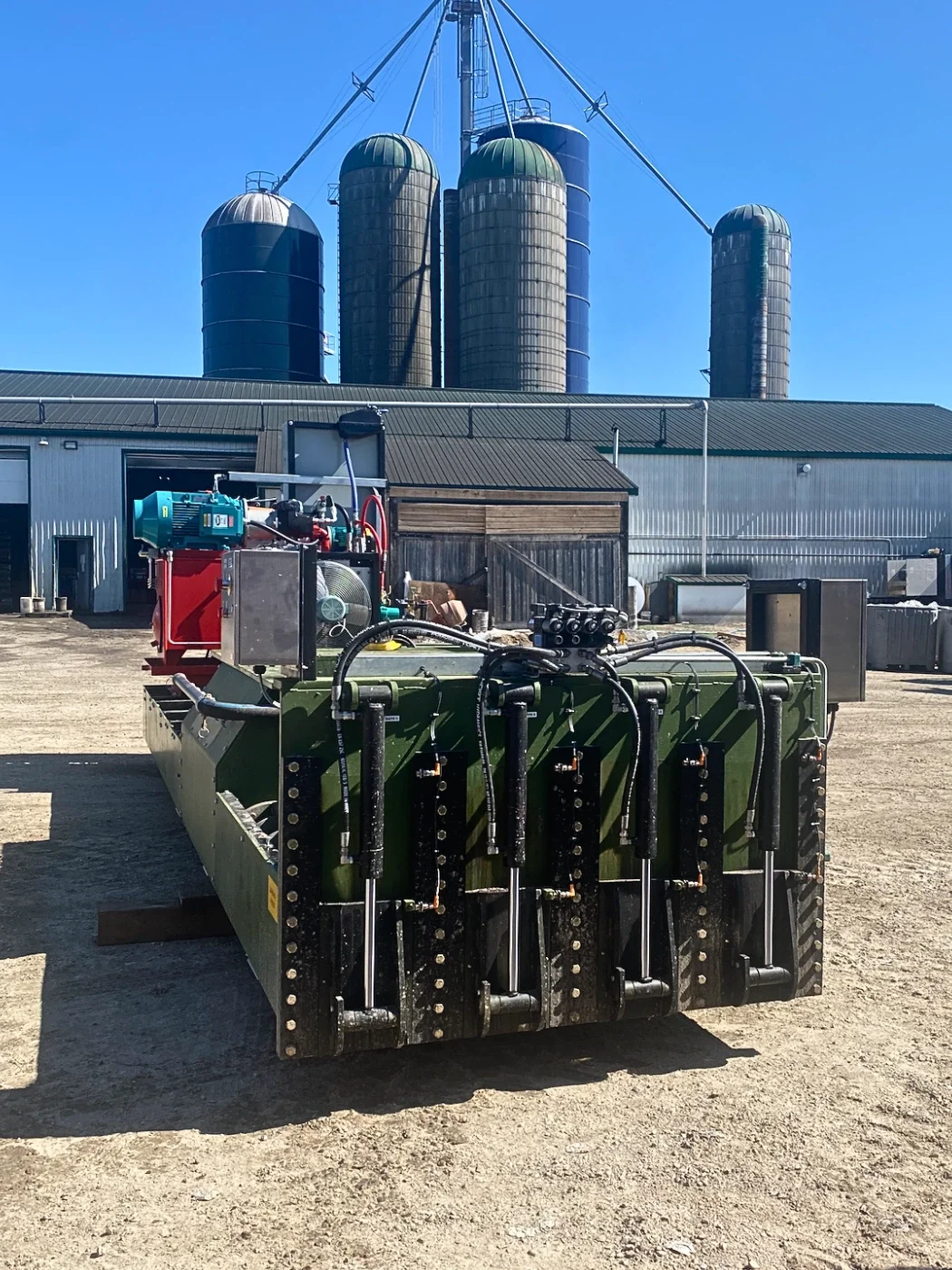
This industrial garbage press was designed and built from the ground up for a recycling facility in Drayton, Ontario.
The facility was processing wet cardboard and plastic packaging waste that contained a significant amount of liquid. While the material could still be recycled, transporting and handling it in that condition created additional challenges throughout the rest of the process.
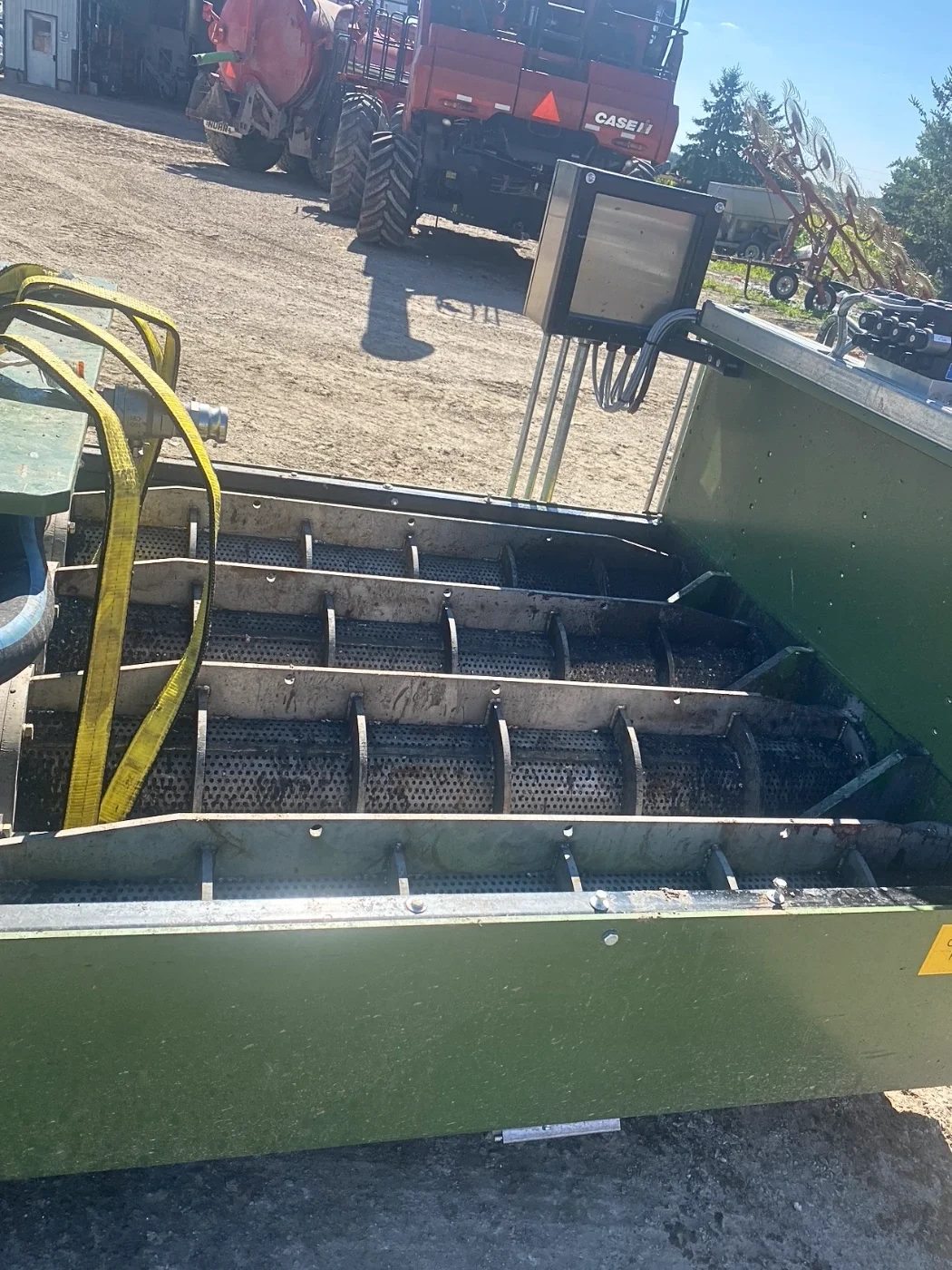
The goal wasn't simply to compress the material, but to remove as much liquid as possible before it continued through the recycling stream. The finished machine was designed specifically around that process, with material being loaded into the top of the press, compressed hydraulically inside the chamber while liquid is forced out through an internal screening system. The separated liquid is collected beneath the machine, while the compressed material exits through the discharge and continues through the recycling process.
Unlike many of the projects throughout this portfolio, this wasn't a repair or replacement component. It was a complete custom machine built around the way one customer needed to process a particular waste stream in their plant.
Wet Material Creates Different Problems
Processing wet packaging waste isn't just a matter of handling heavier material.
Moisture affects almost every stage of the operation. Wet material takes up valuable storage space, creates runoff that has to be managed, and increases the amount of weight being moved around the facility. In many cases, a significant portion of that weight is liquid rather than solid material.
Removing that liquid before the material continues through the recycling process helps produce a material stream that's easier to manage while allowing the runoff to be collected and redirected separately from the outset.
Designing the Process Instead of Just the Machine
One of the advantages of building custom equipment is that a machine can be designed around the process instead of asking the process to adapt to the machine.
For this project, that meant considering what needed to happen from the moment the material entered the facility until it left the machine.
As hydraulic pressure is applied:
liquid is forced from the material
steel screens allow the liquid to drain away
runoff is directed into a collection system beneath the press
the remaining material is ready for the next step of the recycling process
Each stage was designed to support the one before it rather than functioning as a separate operation.
Standard equipment works well when the application is standard, and this project wasn't.
The material being processed, the amount and variety of liquid that needed to be removed, and the way the recycling facility operated all influenced the design of the finished machine. Rather than modifying existing equipment and hoping it would suit the application, the machine was designed around the process from the beginning.
The completed build included:
the structural frame
compression chamber
steel screening
runoff collection system
material handling features
Each of those systems had a specific role, but they were all designed to work together toward the same objective.
Runoff System Design
Solving the Problem Before the Material Leaves the Plant
One of the most effective ways to improve an industrial process is often to deal with a problem before it creates additional work elsewhere.
For this recycling facility, that meant removing excess liquid before the material continued through the rest of the operation. The finished machine became part of the processing workflow rather than just another piece of equipment on the floor, allowing the material to leave the press in a more manageable condition while the separated liquid followed its own collection path.
Frequently Asked Questions
-
Usually, yes. Material characteristics such as moisture content, density, particle size, and how the material behaves under compression all influence the design. Equipment that performs well with one waste stream may not be well suited to another without changes to the machine itself.
-
Every project is different, but it usually starts with understanding the material being handled, the production goals, available space, how the equipment will fit into the existing workflow, and any limitations within the facility. Those factors help determine whether a custom build is the right approach and how the machine should be designed.
-
Often, yes. Many custom builds are developed specifically to work alongside existing equipment rather than replace an entire production process. The goal is usually to solve one operational problem while minimizing disruption to the rest of the facility.
-
There isn't one answer for every operation. The decision depends on production volumes, labour requirements, the material being processed, maintenance considerations, and the objectives of the facility. In many cases, the first step is understanding the problem before deciding what type of equipment is best suited to solve it.
Related Services
Industrial equipment designed and built around your workflow and production requirements.
Installation, repair, and equipment modifications that keep production moving.
Structural welding and fabrication for custom industrial equipment and repairs.
Similar Projects
Custom-built runoff collection system designed to integrate with an industrial garbage press.
Custom-built industrial rack designed to improve handling and processing efficiency.
Custom production fixture manufactured to improve consistency and repeatability in automated processes.
Let’s Get Started on Your Project
Need a custom-built machine designed around a manufacturing or processing challenge?
Whether you're improving an existing production line, solving a material handling problem, or developing a piece of equipment that doesn't exist commercially, send us your drawings, process information, photos, or project details through this secure form. We'll review the application and let you know whether a custom-built solution is a practical fit for your operation.